
Interior Design at a Glance | What You'll Learn | Program Details | Career Outcomes | FAQ
 Why Major in Interior Design?
The Interior Design program at the O’More College of Architecture & Design at Belmont focuses on cultivating future professionals equipped with creative and technical skillsets, trained to design equitable user-centered environments and inspired to be leaders within their chosen vocation.
It is both a rigorous and rewarding program, rooted in internationally recognized standards set by the Council for Interior Design Accreditation (CIDA) , equipping future licensed interior designers for their chosen vocation.
Our program boasts award-winning students that compete regularly in national competitions and win, such as the prestigious Donghia Scholarship. Our students are coveted among the design community and sought-after for internships and future employment opportunities. Our alumni are well-positioned and active members of the Nashville and broader design realms.
We believe in instilling a passion for life-long learning and serving the community through transformational design. The program is ever-evolving to stay at the forefront of design futures and we value having faculty who are practicing interior designers and architects in the classroom to educate and mentor our students. We build relationships with students and understand that these relationships do not stop at graduation.
We believe in a classroom that extends beyond the walls of the Belmont campus. In addition to multiple “on-site” visits within the Nashville community, we offer opportunities to travel and be exposed to various cultures. These life experiences contribute to the introspective nature of design. We want your education to be challenging, enlightening and invaluable.
Interior design is the balance of art and science to understanding people’s behavior creating functional spaces within the built environment. Interior design is NOT decorating, although decorating can be a part of interior design. Designers can decorate, but decorators cannot design. Interior design is the sculpting of space three-dimensionally, not just the selection of applied finishes, materials and furniture. Interior designers ensure the health, safety and welfare of the public and any user of space
The Interior Design program at Belmont not only prepares the student for a successful career but a meaningful career.
By the Numbers
Interior Design at Belmont University

Request Information
Our Program Goals
The Interior Design major is a four-year, CIDA-accredited program that prepares you to start your career and work towards licensure. As a student, you will:
- Focus students on the implementation of human-centered design theories
- Promote cross-disciplinary collaboration both on campus and within the community
- Create effective and professional communicators
- Foster meaningful design that balances poetic expression and pragmatic solutions
- Protect the health, safety and welfare of occupants within the built environment

Curious about your coursework? View requirements for this degree in the course catalog.
Go beyond the classroom and experience interior design for yourself. In Nashville and around the world, you’ll find opportunities to learn and grow.
- Engage with your community. Nashville is booming with design, providing you with opportunities to present your work to professionals and partner with organizations like the nationally recognized Nashville Civic Design Center.
- Explore the world. Experience other cultures, visit iconic structures and take in the design mediums of the world.
- Join a student organization. With over 180 to choose from, there is no shortage of opportunities to get plugged in on campus. The Belmont chapter of the International Interior Design Association (IIDA) is a great way to connect with fellow interior design majors.


There is no portfolio requirement for admittance into the O'More College of Architecture and Design's programs. All you have to do is complete your application to Belmont and indicate Interior Design as your major when applying.
If you are admitted to the University, then you are admitted to our Interior Design program!
Special Scholarships
Each year, the O’More College awards a number of scholarships to incoming fall undergraduates majoring in one of its academic programs. These awards are renewable for four years (five for B.Arch. majors), provided the recipient maintains all required academic and citizenship expectations. To qualify, you must submit your Belmont application by Dec. 1. O’More departmental scholarships are need-based; students must file the FAFSA to be considered.
Career Possibilities
As an interior design degree holder, you have several options for career paths. Various industries in Nashville and around the globe require the expertise of an interior design professional.
Recent graduates work at firms including Gresham Smith, ASD | SKY, Southeast Venture, Bureau Interior Architecture | Design, Crowell + Company Interiors, Julie Couch Interiors and The Mix Interiors (Class of 2025).
Common career outcomes include:
Commercial Design (retail, corporate, schools, churches): Commercial design involves creating aesthetically pleasing, practical and functional interior spaces for businesses and public venues.
Hospitality Design (hotels, restaurants, spas): The hospitality design industry is one of the best-performing sectors for interior design, and designers play a significant role in maximizing functionality and visual appeal.
Residential Design: Many interior design graduates begin their careers in the residential arena. The focus here is transforming a house into a stylish space that reflects the homeowner’s personality and needs while increasing the property’s long-term value.
Furniture and Product Design: Interior design degree holders aren’t limited to working with interior spaces; they may also design and create furniture and everyday products (such as household appliances), considering how these pieces fit into a space and interact with one another.
Tour Bus, Jet Plane, Yacht and Cruise Ship Design: Highly competent holders of interior design degrees can explore careers in aeronautical, marine or transport design. These fields require a vast amount of technical knowledge in ergonomic design and safety guidelines.
Exhibit Design: Exhibition designers create engaging and attractive displays to be enjoyed by a specific audience or the public. They may work with galleries, museums, convention centers, private businesses and a variety of other spaces.
Lighting Designer: Interior design graduates can use their acumen for creating and implementing the lighting plan for various productions or architectural spaces, enhancing the atmosphere and highlighting key elements of the space.

Miles Robinson
"Interior Design at Belmont provided me with a space to develop skills like sketching, drafting and space planning. But what really impacted me is the way all my professors give us safe environments to ask questions, grow our leadership skills and become excellent communicators. Through my classes, I feel confident selecting appropriate materials for projects, designing healthy buildings and working with professionals. I was given the opportunity to be in New York for a semester to intern and make connections with design experts, and I am thankful for the many opportunities that Belmont interior design has offered me."

Mary Catherine Ball
"My favorite part of design school is the community, culture and sense of family that comes with it. From my fellow design classmates to the professors, everyone is more than supportive of one another. No matter the time of day our professors are available if we have questions or just need advice. And the class I entered with are some of my closest friends. I am truly surrounded by the best group of people I could imagine."
Learn From Expert Faculty
Learn from experienced designers and educators who bring professional practice into the studio. Through personalized mentorship, you'll develop the creative, technical and critical thinking skills needed for a career in interior design.

Rania Awadalla
Email: rania.awadalla@belmont.edu
Office Location: Hitch 306A

Peter Aylsworth
Email: peter.aylsworth@belmont.edu
Office Location: Hitch 301

Paul Biggers
Email: paul.biggers@belmont.edu
Office Location: Hitch 300

Finis Eliot
Email: finis.eliot@belmont.edu
Office Location: Hitch 300B

Blair Fowler

Kelly Gore
Email: kelly.gore@belmont.edu
Office Location: Hitch 201B

Shona Hunt
Email: shona.hunt@belmont.edu
Office Location: Hitch 300C

Heejin Lee
Email: heejin.lee@belmont.edu
Office Location: Hitch 306A

Rebecca Moore
Email: rebecca.moore@belmont.edu
Office Location: Hitch 309

Lauren Patrick

Kathy Worthington
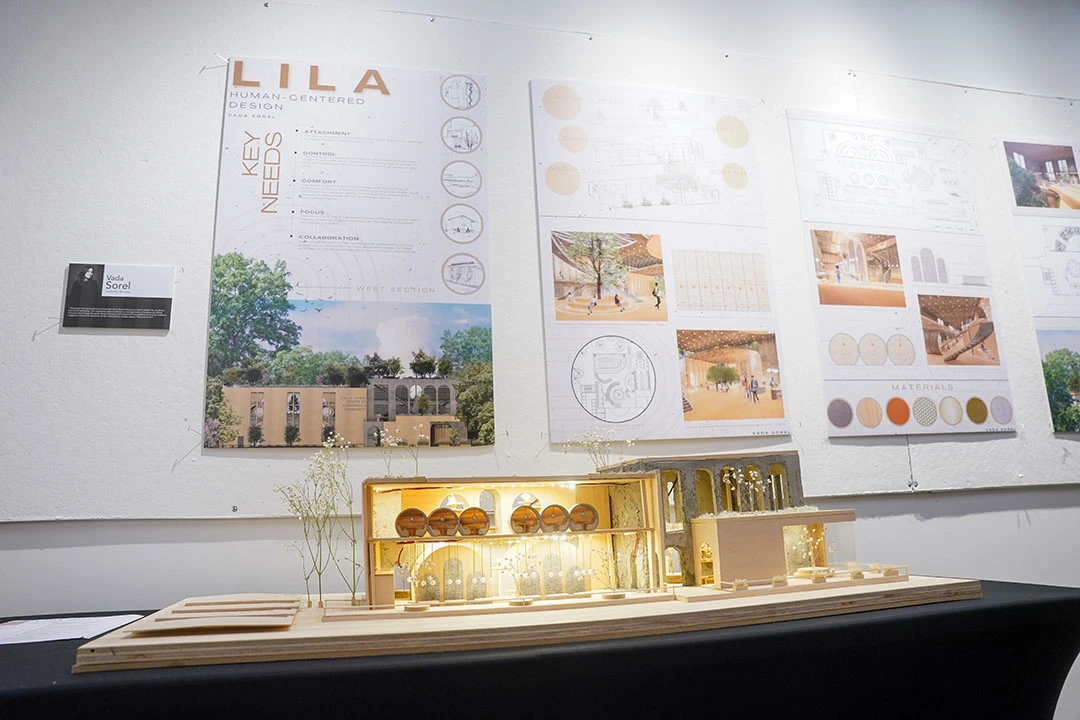
A human-centered design project by Vada Sorel on display at the Interior Design Collective
FAQ
National Council for Interior Design Qualification (NCIDQ) Certification is the industry's recognized indicator of proficiency in interior design principles and a designer's commitment to the profession. Professional interior designers who possess the NCIDQ Certification have distinguished themselves by demonstrating a specific set of core competencies, supported by verified work experience and a college degree. NCIDQ Certification is required for the practice of many types of interior design in regulated jurisdictions throughout North America and enables designers to easily validate their knowledge, experience and skill to employers and clients alike.
Students who complete Belmont's Interior Design program, and fulfill the required years of work experience, are eligible to take the NCIDQ examination for state licensure.
The Council for Interior Design Accreditation (CIDA) is an independent, non-profit accrediting organization for over 150 interior design education programs at colleges and universities in the United States and abroad. In order to receive accreditation through CIDA, an interior design program must meet a set of high academic standards and maintain those standards through a rigorous process of program self-evaluation and peer review.
Attending a CIDA-accredited interior design program ensures that you are receiving a quality education that will prepare you for entry into the profession upon graduation and lay the foundation for your future growth as an interior design professional.
Yes! Students who complete Belmont's Interior Design program, and fulfill the required years of work experience, are eligible to take the NCIDQ examination for state licensure.
We have many students who hold associate or bachelor’s degrees prior to enrolling in the Interior Design program. All credits from a previously earned associate or bachelor's degree program are evaluated on an individual basis by the Office of the Registrar and applied as appropriate toward the B.F.A. degree.
While credits earned from previous coursework may be transferred in, it is important to note that earning a B.F.A. in Interior Design will likely take 7-8 semesters as studio courses must be taken sequentially and the curriculum is planned as a four-year degree program.
There is currently no portfolio review requirement for admission to the Interior Design program at Belmont.
While income varies greatly depending on the state, specialization, experience and other factors, interior design can be an incredibly rewarding career with tangible opportunities for growth and success.
Students are encouraged to bring a laptop (preferably a PC) for use in and outside of the classroom. Software needed for coursework includes Adobe Creative Suite, AutoCAD (downloadable student version), Sketch Up (downloadable student version) and Revit. Most architectural software is designed for PCs, not Macs.
Students may begin the interior design program in the Fall or Spring term. Recommended term start is the Fall semester. See the official Academic Calendar for more important dates.
The typical entry-level education requirement for interior designers is a bachelor’s degree in interior design. However, you can also enter this occupation by completing any related field, such as interior architecture and other degrees in fine arts.
You can start your own business or work with companies as a commercial or residential interior designer. But don’t restrict your thinking to jobs that only involve conceptualizing and implementing designs. A bachelor’s degree in interior design will equip you with the specific technical and creative skills to succeed in various fields, including education.
The interior design market is growing, thanks to the rising value of the real estate industry, increasing disposable income and growing awareness of various interior designs due to social media platforms and influencers.


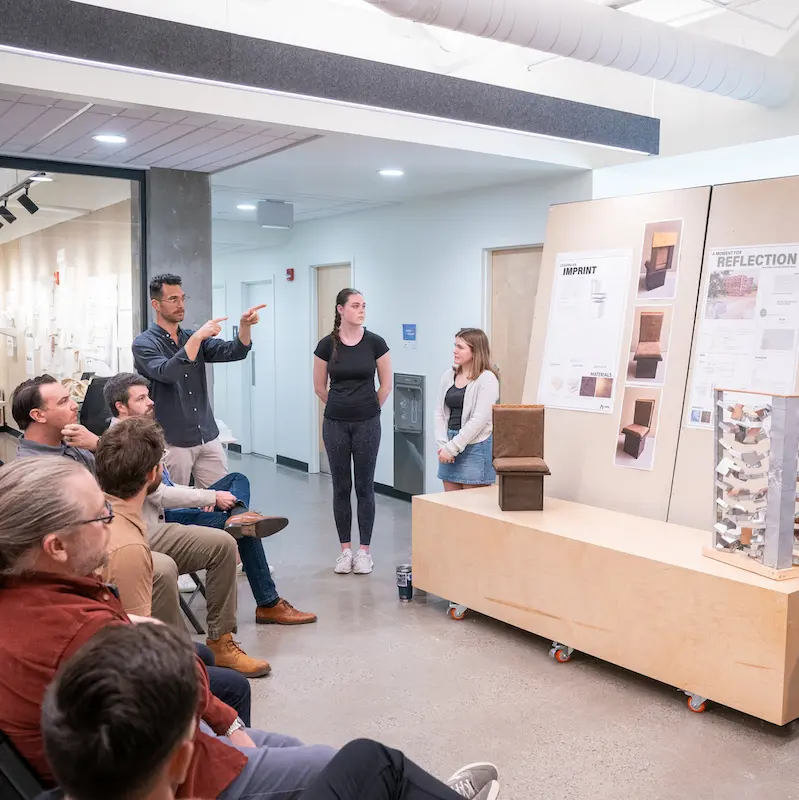
Spring & Summer Enrollment
If you are considering applying for a Spring or Summer entry term, please contact your admissions coordinator "Sarah Augustyn" to discuss your academic plans before you apply.
Contact Us
O'More College of Architecture & Design
Sarah Augustyn
Admissions Coordinator
615.460.5329
Email Sarah
Plan Your Visit
There's no better way to experience Belmont than by visiting campus. Whether you attend an admissions event, take a student-led campus tour or explore Nashville while you're here, a visit helps you picture yourself as part of the Belmont community.